News & Insights
Stay updated on the latest trends and valuable insights in the world of recruitment, workplace inclusion, and job hunting.

Stay updated on the latest trends and valuable insights in the world of recruitment, workplace inclusion, and job hunting.
Written By: Aidana Rakhimova
Published On: December 16, 2024
Accessibility, diversity, inclusion… words that many of us have heard in the context of employment and our current workforce landscape. Let’s take a closer look, from the perspective of the employee accommodations process.
At INNoVA, we know that accessible work environments enable businesses to leverage the diversity in our Canadian workforce, which nurtures innovation and growth in our organizations. Workplace accommodations and adjustments are key components of sustaining this diversity. Whether you are working with an employee who has a disability, an injury, illness, medical condition or ANY employee for that matter. Disability is a minority group that any of us can become a member of at any time; ONE in FIVE Canadians live with a disability.
A workplace accommodation is a modification made in the work environment that removes a barrier and enables a person with a disability to perform their job. Workplace accommodations and adjustments are imperative in ensuring that your employees can do the work to the best of their ability; this impacts your business productivity, employee morale and reduces levels of employee absenteeism and turnover. The duty to accommodate is also a legal requirement for employers, which carries two components; the procedural component (how is an accommodation request assessed?) and a substantive component (what accommodation is provided?).
Building an Accessible Workplace: Insights
Workplace Culture Health Check
One of the most important aspects that will determine an employee’s comfort level in discussing their workplace needs with you, is the trust and transparency between employer and employee.
Consider… what is your front-line manager’s typical response when a suggestion is made by an employee? What happens when there is a miscommunication? These are the opportunities for leadership to bring in their curiosity, to ask for more information, to give employees the benefit of the doubt. A common response from the leadership team here at INNoVA is “That is interesting, tell me more…”, “Yes and…”, “Thank you for bringing this up…”
Your communication as a leader, your initial responses to suggestions and feedback, are nuances that give your employee a sense of psychological safety in discussing more sensitive topics with you in the future. Each interaction you have with your employees is an opportunity to build trust and a sense of belonging.
Commitment to Accessibility and Accommodation Policy
Before developing the “what” and “how” of your accommodation policy, it is important to envision what you are aiming for. It’s important to reflect on how you want your commitment to accessibility to be felt, articulated and presented. Consider all stakeholders that might interact with your business; employees, job seekers, clients, customers, suppliers, vendors… when interacting with your organization, how is your commitment to accessibility apparent? An inclusion & accessibility statement is a good starting point, however it must be backed up with well though-out policies and practices, and leadership engaged in the accessibility learning journey.
Some intentional reflection on your commitment to accessibility will help you build a culture of accessibility best practices and become an employer of choice, rather than solely a legal-compliance workplace culture.
Who is Responsible?
Once your organization has developed an accommodation policy that clearly communicates your commitment to accessibility and how an employee’s request will be handled, it’s time to identify your key players. Contrary to popular belief, accessibility is not an “HR issue” or “someone’s else’s job”, it is a shared responsibility.
An employee’s direct manager for example, needs to be trained and equipped to handle requests for accommodations. This involves investing in disability confidence training for your front-line leaders, to empower them to anticipate employee needs and potential workplace barriers. Best practice in the accommodation process is to approach requests as a collaboration and partnership between the manager, employee and subject-matter experts where needed. For more complex accommodation requests, additional support from your Human Resources team or an internal or external accessibility consultant may be necessary.
The employee has the responsibility to inform you of their workplace accommodation needs and to engage and collaborate in the process. However, employers also have a duty to inquire, when an employee has not made a request and it is evident that their may be experiencing barriers and performance is being impacted. Frequent check-ins with employee are helpful, and open opportunities to welcome suggestions on practical supports needed to do the job, and what is important for the employee to bring their best selves to work. And if a manager is comfortable, being open to sharing how accommodations, flexibility and workplace adjustments have benefited them personally (disability or not). This normalizes the accommodation conversation and encourages a collaborative approach.
Rethink Medical Notes
Traditional accommodation processes are often based on the medical model, where medical documentation is a requirement to engage in the process. True inclusion means the removal of barriers in our practices and policies, it is time to reflect on the purpose of requiring medical notes. In some cases, they may be helpful, however in many cases they pose more barriers and may not be truly necessary.
Consider… a medical doctor’s expertise is in making a diagnosis, but not necessarily in workplace accessibility and accommodations. An employee may also experience significant delays based on their medical specialist or doctor’s availability, as well as costs (an assessment to diagnose a learning disability for example, can cost anywhere from $1500-4000, not to mention the long wait times).
It’s important to remember that the reason that an employee makes an accommodation request, is to enable them to be successful in their job. Often, when one employee requires a change to the work environment or alternate work options, other employees may also benefit (disability or not).
Here at INNoVA, workplace accommodations are focused on the adjustment and accommodation needed (rather than a diagnosis). Responses to requests are rapid and streamlined. We use the social model of disability (which views the environment as disabling rather than a person’s disability as disabling); we aim to de-medicalize and destigmatize accommodations. Think about: quick approval timelines, streamlined processes, employee needs heard, and a partnership model between employees and managers.
Conclusion: Simple Changes, Significant Impact
Accommodations don’t have to be complex nor expensive. Think about…
Accommodations and adjustments enable any employee to increase their productivity by allowing them the tools and flexibility to do the job in a way that works for them, while still meeting core business goals.
INNoVA’s Accessibility Consulting Services can offer support is all areas of the accessibility journey, including the employee accommodations process, disability confidence training and supporting best practices to cultivate inclusive work environments. One of your most valuable resources are your employees, and when they are engaged and empowered to do the job to the best of their ability, you are setting up your organization (and anyone who interacts with it) for success.
Subscribe to receive the latest blog posts to your inbox every week.

© 2024 INNoVA. All rights reserved.

Jamie combines a pragmatic focus on business strategy and outcomes with an unwavering drive to foster meaningful inclusion in organizations across Canada. The success of her uncommon and powerful approach has yielded accolades in accessibility, innovation and inclusive business practices, and advanced dialogue at all levels about what’s possible when organizations prioritize inclusion.
Transformative partnerships are at the center of Jamie’s approach, both as an organizational leader building a dynamic, resilient and high-performing team within INNoVA, and as a business advisor. With an unflinching and optimistic focus on elevating business and a profound understanding and embrace of innovation, Jamie has the ability to help business leaders transform their workplaces and boost the bottom line.
Under Jamie’s leadership, the INNoVA team helps businesses flourish by tapping into the unique strengths of real organizational diversity and active inclusion. INNoVA deploys design principles, deep experience and innovative approaches to develop solutions that ensure a healthy and dynamic workforce. This is a critical step toward meeting productivity and efficiency thresholds necessary to build sustainable business practices and foster a more equitable and resilient supply chain.
Jamie believes that organizations can thrive in a future that is innovative and inclusive – a conviction based on years of research, experience and results. She brings this knowledge to every partnership along with the grit, humor and determination to make it happen.

Michael is a seasoned project manager and business analyst with over two decades of experience across various sectors, including insurance, finance, political campaigns, and community outreach. At INNoVA, Michael leads project management, logic flow analysis, testing services, and marketing development for the SPHERE and DQI App. His expertise lies in project management, analysis, strategic planning, and volunteer management with a commitment to driving impactful results. With a Bachelor of Arts in Political Science from Wilfrid Laurier University of Waterloo, Michael has successfully managed successful political campaigns through developing inclusive strategic plans and has led numerous key initiatives in business processes and operational efficiency at CCRW and Manulife Financial. Michael is passionate about LGBTQ+ community involvement and has chaired the PROUD Committee, served as Festival Chair for the Rainbow Reels Film Festival.
Rubeena Singh is an inclusive leader and strategist working at the intersection of business, human rights, and innovation. With over 13 years of experience engaging with multi-stakeholders in complex ecosystems, she transforms evidence-based research into actionable policies and frameworks that drive accountability, transparency, and community impact.
Rubeena authored the groundbreaking report, “Putting the I in ESG: Inclusion of Persons with Disabilities as Strategic Advantage of Sustainability Practices for Corporates and Investors” with the International Labour Organization’s Global Business and Disability Network (ILO GBDN), helping businesses embed disability inclusion within ESG frameworks. Her extensive research experience includes roles at prestigious institutions such as the ILO and the Economic Research Institute for ASEAN and East Asia (ERIA), where she aligned startup ecosystem strategies with sustainable development goals across diverse economies.
Her earlier career as a pediatric Speech-Language Pathologist included advocacy and collaboration with NGOs and government ministries in Cambodia, exemplifying her ability to navigate complex stakeholder landscapes. Having lived and worked across Toronto, Vancouver, Phnom Penh, Madrid, London, and Riyadh, Rubeena brings a global, multicultural perspective to her work.
Rubeena holds a Master’s in Health Sciences from the University of Toronto and a Master of International Development, completed in partnership with the United Nations System Staff College, from IE University in Spain.

”Accessibility isn’t about checking a box…it’s about systems that recognize and value the full diversity of human experience. Embedding that understanding into the fabric of society makes inclusion expectations instead of exceptions.”
Amy is a dedicated public servant, consultant, and accessibility advocate committed to advancing inclusive, barrier-free communities. She brings expertise in policy, community engagement, human resources and universal design, with a proven ability to create impactful system-level change.
In her role as a senior consultant, she leads strategic initiatives, builds cross-sector partnerships, and helps organizations embed accessibility and equity into their core practices. Grounded in both lived experience and change management, she works to bridge the gap between intention and impact to ensure accessibility is not an afterthought, but a foundation.
Her focus is clear: designing cities and systems that work for everyone.

“I believe every Canadian deserves an opportunity to excel in the workforce and I am deeply inspired by INNoVA’s commitment to removing barriers through employee engagement and innovation strategies”.
Paul McCullough is an Independent Director and Senior Business Advisor to several major enterprises, and serves on the board and audit committee of the Paralympic Foundation of Canada. With a career spanning the public and private sectors as well as academia, Paul is widely recognized for leading successful transformational change initiatives. He is a trusted advisor and respected expert, known for his exceptional financial acumen and deep experience working with regulated, complex organizations to advance strategic goals, enhance reputations, and foster critical partnerships for long-term success.
Until July 2023, Paul served as Chief Executive Officer and Interim President of the British Columbia Institute of Technology (BCIT), following nearly a decade in senior executive roles within the institution. His corporate background includes leadership roles in governance and financial reporting with global firms such as HSBC and Unilever, and over 13 years as a Principal at KPMG. His international experience includes professional engagements in London, Dubai, and Hong Kong. Paul is an elected Fellow of the Chartered Governance Institute of Canada and holds the designation of Accredited Director.

“Closely connected to my daily work, I believe every person has the potential and should have the opportunity to participate in the workforce, and it is our shared responsibility to remove the barriers that exist”.
As the General Manager, WW Strategy and Operations for the Commercial Solution Area business, Jay and his team work across the entirety of Microsoft’s commercial offerings to define, design and drive the go-to-market strategy that supports their $100B+ global cloud business, spanning across Microsoft 365, Azure and Business Applications.
Prior to this role, he spent the last 6+ years leading the Modern Work, Security and Surface businesses across the America’s (Canada, US, LATAM), overseeing sales, marketing and operations across productivity platforms such as Microsoft Teams; Employee Experience Platforms including Microsoft Viva; generative AI offerings including Copilot as well as Microsoft’s 1st party Surface hardware.
He also serves as a chief storyteller and evangelist, partnering with Microsoft’s sales and customer success teams, and advocating for hybrid work, accessibility, and inclusion.

As an individual with a major disability (failed spine surgery disorder and sciatic nerve issues) I understand the importance of a comprehensive and innovative workplace with well-rounded solutions.
With the lived experience to truly understand the value of inclusion and a background from WLU, I’m here to help INNoVA grow and thrive. With over 15years experience of trust and relationship building, I understand the needs and wants of the changing environment and the customers within.
In my current role as Customer Success Consultant, I assist with expanding the diverse client base INNoVA has strived to create while assisting with the formulation of company specific plans to meet organizational needs. It’s time for everyone to bring their best selves to work and create a sustainable and real employment life cycle that allows everyone to participate.

I hold a Bachelor of Science from McGill University and am completing an MLIS from the Faculty of Information & Media Studies at Western University. My research examines a radical reworking of LIS classification systems. By adopting a lens that challenges conventional Western thinking, my aim is to deconstruct and create an inclusive classification system, devoid of binaries that influence society and how information is retrieved and understood.
I have built my life around lifelong learning, respect, and the pursuit of truth. These values depend upon access to accurate information and a commitment to an open exchange of ideas. They inform my passion for public libraries and fuel my enthusiasm for developing meaningful partnerships that positively impact local community. As an expert in information procurement, I feel most content when I’m able to help people effectively articulate, seek, and evaluate information. I believe Information is power. But like all power, there are those who want to keep it for themselves.
When I’m not researching or writing, I’m tending to my ¼ acre Zinnia Garden, a pollinator paradise for local butterflies and bees. As Hans Christan Anderson wrote, just living is not enough…one must have sunshine, freedom, and a little flower.”
BOOK YOUR WORKPLACE
ASSESSMENT
Privacy preferences
We use cookies to enhance your browsing experience, serve personalized ads or content, and analyze our traffic. By clicking “Accept”, you consent to our use of cookies. Cookie Policy
With over a decade of experience working with businesses, employees, and job seekers, Emily is passionate about workplace accessibility and inclusion. Emily is an International Association of Accessibility Professionals (IAAP) Professional Member and a Certified Professional in Accessibility Core Competencies (CPACC). Emily has additional expertise in all areas of accommodation and adjustment including assistive technology.
Emily is always looking for opportunities to both further develop her expertise in best practices for accessibility and inclusion and share that knowledge with others in any way she can.
In my role as an accessibility research analyst, I’m all about creating strategic research questions and organizing them in a way that serves up practical insights. I dive deep into literature reviews, carefully collect data via surveys, informational interviews and other modes and turn it all into easily consumable information with the support and collaboration from data analysts and accessibility consultants. My aim is making sure organizations not only meet but surpass the ever-changing demands of accessibility standards. On the achievement front,

Innovation is at the heart of overcoming design challenges for Sawyer, who consistently pushes the boundaries of what’s achievable in the dynamic digital space. Positioned at the forefront of the rapidly evolving industry, there’s an eagerness to embrace the continuous growth and transformation within this field. In Sawyer’s perspective, the synergy between creation and advancement relies on processing information and constructing novel ideas that have yet to materialize. Emphasizing the interdependence of these actions, there’s a focus on the necessity of looking towards the potential for progress rather than dwelling solely on past achievements. By redirecting attention towards the possibilities waiting to be realized, there’s an envisioned journey towards unprecedented heights and the surpassing of current limitations.

My expertise involves deriving insights by analyzing data and creating analytical models to demonstrate the impact of work, ensuring data quality and accuracy, creating surveys and collection of data from various sources, and building reports and interactive dashboards. I also have an extensive background in database management, and data analytics along with experience in accessibility, compliance, and workplace accommodations. By identifying underlying patterns and trends, my work informs the business to make evidence-based decisions. My qualifications include a master’s degree in management information systems from Florida International University.
My role at INNoVA focuses on reducing the guesswork by accessing information and simplifying/automating tasks. In the world today, it is not magic, but information captured by data processing that gives us the ability to identify what the course of the future might be and to plan accordingly. I believe by collecting data and analyzing it, every business can identify opportunities, gaps, trends, and patterns to help them grow and reduce risks.

Aidana Rakhimova is skilled in brand development and marketing, with rich experience in both jewelry and hospitality industries. She excels in building and enhancing brand identities, a skill she demonstrated in her own brand’s growth and in her strategic role in the expansion of a Middle Eastern hotel chain. Her expertise combines creative design with strategic market analysis and project management, making her a valuable asset across various business contexts.
In her role at INNOVA, Aidana advocates for a harmonious blend of creative branding and operational efficiency. She focuses on an approach that combines branding with practical business strategies, enhancing INNOVA’s position in the market. Emphasizing adaptability and a forward-looking perspective, Aidana ensures that INNOVA stays agile and responsive to evolving market trends while maintaining its core brand values. Her goal is to integrate innovative ideas into effective business solutions, boosting INNOVA’s client engagement and overall success.
As a person with a major disability (cerebral palsy), Rebekah brings a number of life skills and business expertise to INNoVA that will help grow the business globally.
After completing her Bachelor of Business Administration with a specialty in HR, Rebekah then gained work experience in the Banking and Commercial Real Estate Industries where she provided administrative, financial, HR, and EDI ( Equity, Diversity and Inclusion) support. She also interfaced directly with customers, where she answered questions, problem-solved, and dealt with confidential matters.
In Rebekah’s volunteer roles, she has provided advice on how to best integrate persons with disabilities into the workforce, has twice been published by the Globe and Mail on what it is like to be someone with a disability in a wheelchair, has lived all across Canada and experienced different cultures and lastly traveled the world.
Rebekah is committed to accomplishing every task at INNoVA with the utmost professionalism, team spirit, timeliness, sensitivity (particularly given our role in supporting people with disabilities), and commitment to helping grow the business.
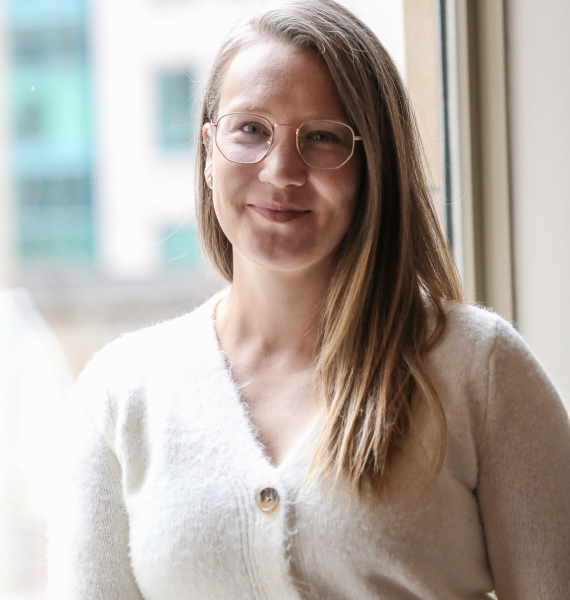
Ensuring that INNoVA truly stretches from coast to coast, I hold down the fort in the country’s most easterly point. Working out of St. John’s, Newfoundland, I have been leading change in the space of Disability and Employment since 2013. With a background in Psychology and Education, I apply my expertise and experience across varying levels of project, solution, and service delivery and lead INNoVA, in the solutions we design and deliver for our clients.
I consider myself a forward-thinking leader, and my career path has given me the opportunity to learn from strong women leaders. With a foundational education background in psychology, I have spent the last 10 years in the realm of disability and workforce inclusion, dedicated to reshaping the business landscape. With a passion for innovative solutions, I lead initiatives that not only foster diversity for our clients but also drive meaningful growth. My strategic approach and commitment to creating an inclusive work environment are transforming the way businesses operate, and at INNoVA, making a lasting impact on both individuals and organizations alike.
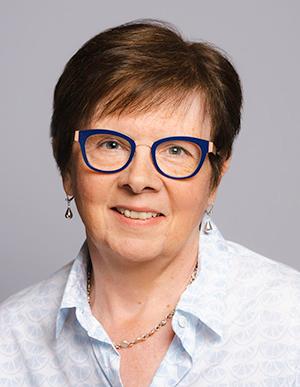
Pat Sorbara is a veteran strategist, entrepreneur, political and government executive, and has been recognized for her skill and discipline in setting ambitious goals and impelling teams to achieve concrete results.
Pat has had significant success in both the private and public sectors. As a founding partner of Advanced Utility Systems Corporation in 1997, she helped drive the tech company toward its successful sale in June 2006. In government, she served as Deputy Chief of Staff to the Premier of Ontario, and as Chief of Staff in key ministries such as Education, Intergovernmental Affairs, Energy and Women’s Issues. Her rigorous, data-driven approach to election campaigns has made her one of Canada’s leading election strategists, resulting in some of the most impressive victories in recent decades.
Pat is recognized as a trailblazer for women in government and politics. She chronicled the lessons and experiences of a lifetime of activism and engagement in her critically acclaimed 2019 book, Let ’Em Howl: Lessons from a Life in Backroom Politics.